


Best law firm in Coimbatore/ Best advocates in Coi...
2024-04-02T07:11:10  read more
 read more
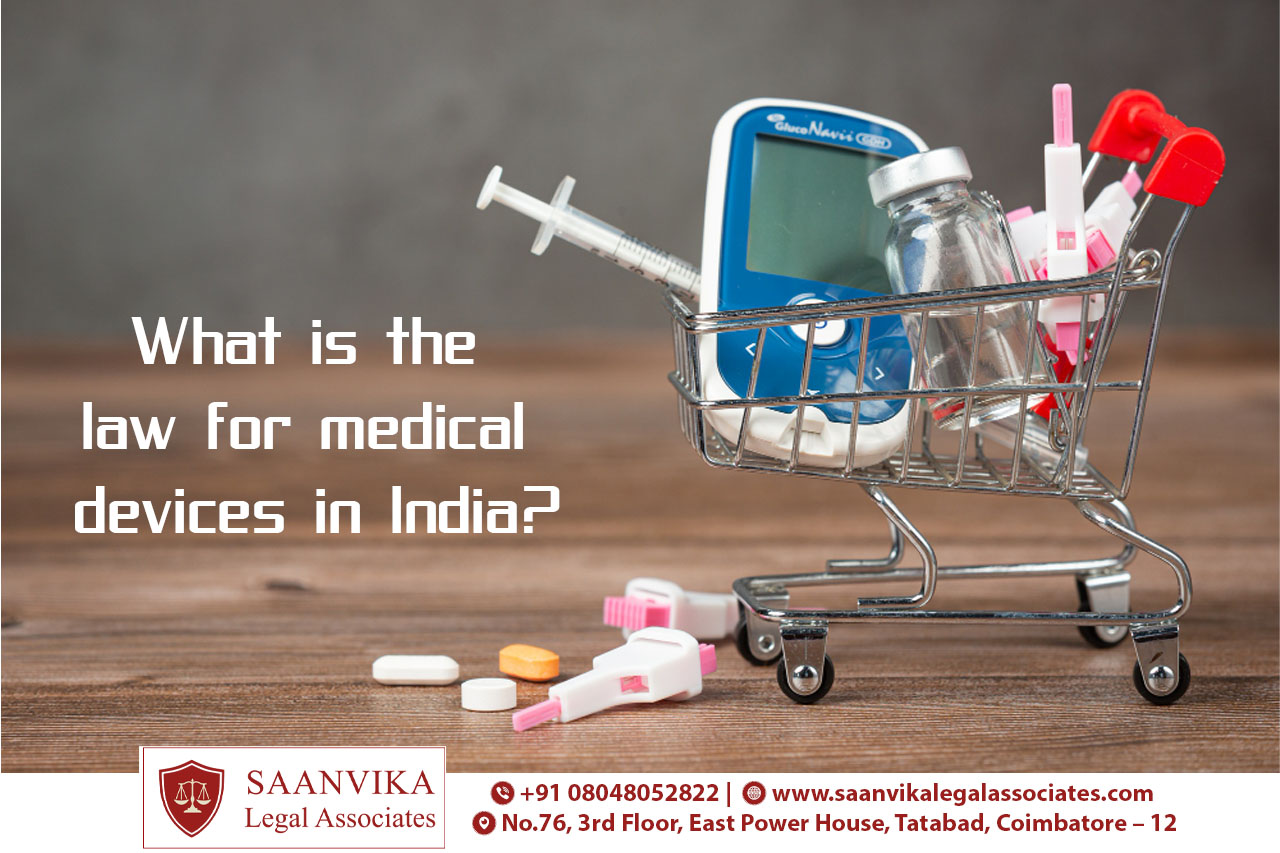

Medical devices/ Law for medical Devics/ Law for medical devices in India/ Best law firm in Coimbatore/ Best advocates in Coimbatore/Best law service in Coimbatore/ Best legal consultation in Coimbatore/ Best legal services in Coimbatore/ Best lawyers in Coimbatore/ Online legal consultation. The regulation of medical devices in India is governed primarily by the Medical Devices Rules, 2017, which were introduced under the Drugs and Cosmetics Act, 1940. These rules were subsequently amended in 2020 to bring them in line with global standards and to address various issues concerning the safety and quality of medical devices in India. Key aspects of the law for medical devices in India include: → The rules classify medical devices into four categories: Class A, Class B, Class C, and Class D, based on their risk profile. Higher-risk devices face more stringent regulatory requirements. → Manufacturers and importers of medical devices must register their products with the Central Drugs Standard Control Organization (CDSCO) and obtain import or manufacturing licenses, depending on their activities. → Medical devices must adhere to specified quality standards, including those set by international organizations such as the International Organization for Standardization (ISO). → The import and export of medical devices are regulated by the Directorate General of Foreign Trade (DGFT) and require compliance with various customs and quality control requirements. → Clinical investigations involving medical devices are regulated under the New Drugs and Clinical Trials Rules, 2019. Manufacturers must seek approval from the CDSCO before conducting clinical trials. → Medical devices must have proper labeling and packaging, including information about their intended use, safety instructions, and manufacturer details. → Manufacturers and importers are required to report adverse events related to medical devices to the CDSCO, which helps in monitoring the safety and performance of devices in the market. → The National Pharmaceutical Pricing Authority (NPPA) has the authority to regulate the prices of certain medical devices to ensure their affordability and accessibility. The CDSCO, along with State Drug Control Authorities, is responsible for regulating medical devices in India. India is working to establish a separate regulatory authority, the Central Medical Devices Authority (CMDA), to further strengthen the regulation of medical devices. It has also been working to align its regulatory framework with international standards to facilitate the import and export of medical devices and promote their quality and safety. At Saanvika Legal Associate, other law cases like business law, financial law, insurance law, environment law, consumer law, property law, banking, tax, cyber, labor, constitutional, legal registration, litigations, criminal, family law, and so on are provided. All kinds of Law services are offered by experienced lawyers that result in the success of your cases in every way possible.
 read more
  read more
 We hate spam too.


